On July 7, 2025, the IRS quietly made a move that set off alarm bells—and celebrations—depending on who you ask. In a federal court settlement involving two Texas churches, the IRS agreed not to enforce the Johnson Amendment against them. That amendment, which has long barred churches from endorsing political candidates while retaining tax-exempt status, has now been weakened. Technically, the ruling only applies to those two churches. But in reality, this is a signal—a shift in posture from the IRS that could have ripple effects for every pastor in America.
So here’s the big question:
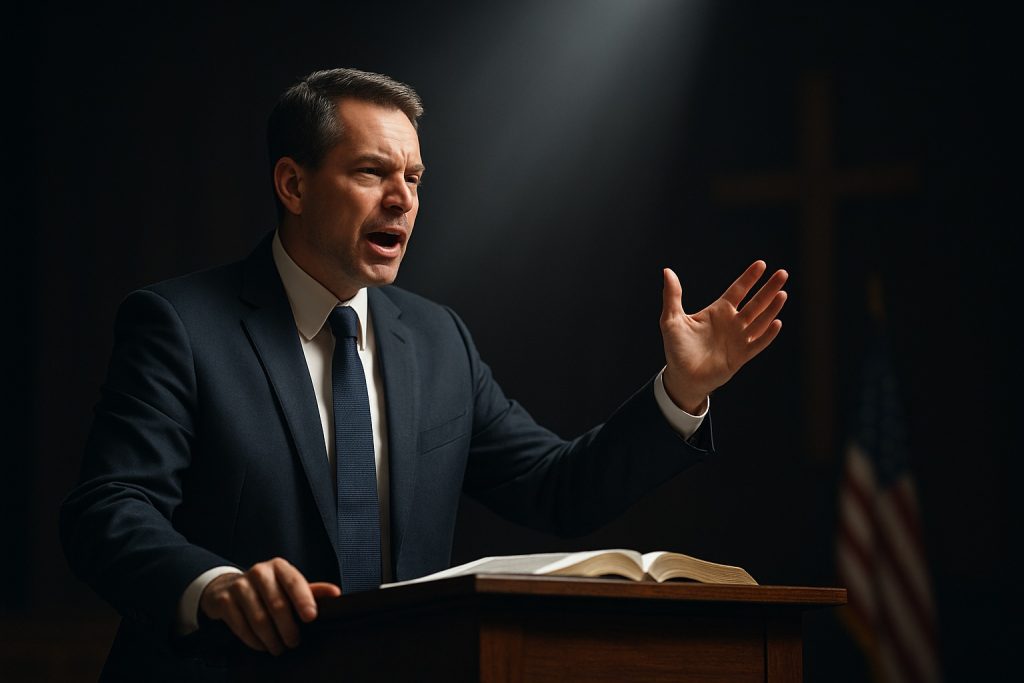
Should pastors be allowed to speak freely about political candidates and still retain their church’s tax-exempt status?
As a Christian—and a citizen who deeply loves this country—my answer is yes. Absolutely yes. And not only is it reasonable… I believe it’s biblical.
Let me explain.
1. Scripture Doesn’t Condemn Tax Benefits
Let’s be clear: receiving a tax exemption from the government isn’t a compromise of faith. There is no command in Scripture that says a church must forfeit every civil benefit in order to remain holy.
In fact, the Apostle Paul used his Roman citizenship as a legal shield to avoid flogging (Acts 22:25–29). He knew the rights available to him and wasn’t afraid to use them. Jesus Himself affirmed that we live under both divine and human authority when He said, “Render to Caesar what is Caesar’s and to God what is God’s” (Mark 12:17). That means we can live wisely within the laws of the land—as long as they don’t force us to sin.
Tax-exempt status is simply a legal recognition that churches serve the public good. It doesn’t give the government control over the pulpit—unless we let it.
2. Free Speech Is Not Unbiblical
Let’s not forget: biblical leaders have always spoken into politics.
- John the Baptist lost his life for calling out Herod’s sexual immorality (Matthew 14:3–4).
- The prophets routinely confronted kings with warnings and rebukes.
- Paul reasoned with Roman officials about truth and judgment (Acts 24–26).
So when a pastor today says, “This candidate promotes the murder of unborn children,” or “This leader stands against God’s design for gender and marriage,” that’s not politics—that’s truth. And truth should never be muzzled because of a tax form.
3. Tax-Exempt Status Shouldn’t Be a Gag Order
If a church has to earn its tax exemption by staying silent on moral issues, that’s not freedom—it’s a leash. And the Gospel was never meant to be preached on a leash.
Paul said it boldly in Galatians 1:8: “Even if we or an angel from heaven should preach a gospel other than the one we preached to you, let them be under God’s curse!” That includes any system—governmental or spiritual—that tries to limit the truth for political convenience.
We cannot accept the lie that “If you want to keep your benefits, you’d better keep quiet.” That is not the spirit of Christ. That’s the spirit of control.
4. Churches Serve—and Deserve Protection
Churches aren’t political machines. They’re rescue stations for broken people. They feed the hungry, counsel the grieving, house the homeless, and preach eternal hope. That’s why churches are tax-exempt to begin with—because they contribute to the common good in ways government programs never could.
Removing tax-exempt status over a sentence in a sermon would be like punishing a doctor for recommending exercise. It makes no sense.
Scripture says, “Make the most of every opportunity, because the days are evil” (Ephesians 5:16). If that means using legal protections to advance the Kingdom, then so be it.
5. Policy Directly Affects the Church
This may be the most important point of all.
Politics affects people. And people are who the Church is called to reach.
When a government legalizes abortion up until the moment of birth, that affects us. When it pushes gender confusion on children and punishes Christians for refusing to go along with it, that affects us. When school boards adopt policies that undermine biblical truth, that affects us.
We don’t have the luxury of pretending politics is a secular issue. When civil leaders are openly rebelling against God’s design, the Church must speak clearly—and that includes naming names.
Proverbs 29:2 says, “When the righteous are in authority, the people rejoice: but when the wicked beareth rule, the people mourn.” Endorsing righteousness is not political partisanship. It’s biblical discernment.
And when we stay silent to preserve tax status? That’s not wisdom. That’s fear.
We’ve already seen the damage that can be done when churches compromise with the culture. Progressive Christianity is distorting truth in the Church—and it’s leaving people lost, unchallenged, and unrepentant.
My Conviction
I believe pastors must be free to speak boldly about political candidates—especially when truth is on the line. That kind of speech shouldn’t cost a church its tax-exempt status. And if it does, we should be willing to lose it rather than compromise the Word of God.
But the truth is, we don’t have to choose.
If a corporation can donate to political campaigns and keep its legal protections, why can’t a pastor preach truth from the pulpit and still receive tax-exempt recognition for the good his church does?
And now, even the IRS seems to agree. In its recent settlement, the agency clarified that pastors speaking during religious services through normal church channels is not considered political “intervention.” That means, at least for now, the IRS’s July 2025 settlement with two Texas churches is a game-changer.
“Have nothing to do with the fruitless deeds of darkness, but rather expose them.” — Ephesians 5:11
The Church must not be silent.
Arch Kennedy
Bold, Unfiltered, and Unafraid
 Twisting Scripture for Politics: The Real Threat Inside the Church
Leave a Reply