I’ve heard the term Christian nationalism tossed around more times than I can count. It’s all over the media, plastered across political debates, and used like a weapon to silence Christians who dare to speak up about their values.
And if you listen to the loudest voices on the Left, you’d think anyone who loves both God and country is a dangerous extremist. But is that really the truth? Or is there more to the story?
Today, I want to cut through the noise and set the record straight—not just about what the term means, but where I personally stand as a Christian who loves America, votes my convictions, and ultimately puts my hope in Jesus Christ alone.
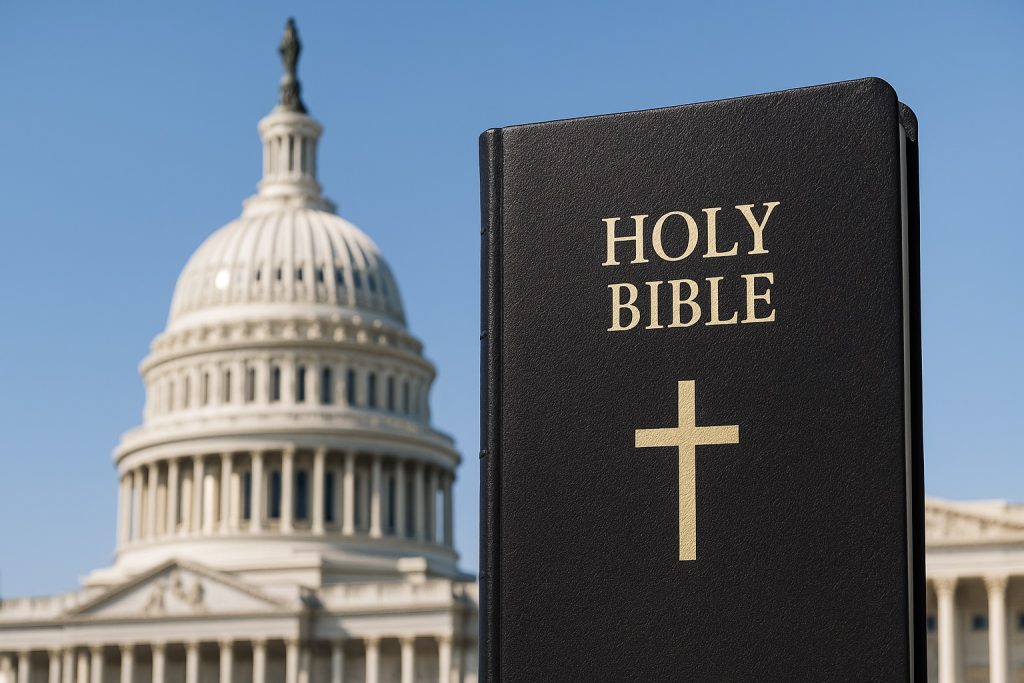
My Personal Take on Christian Nationalism
Let me be clear right from the start. I do believe America’s laws should reflect biblical values. I believe God’s design for life, marriage, justice, and freedom should shape the moral framework of our nation. After all, every law we pass is based on some moral code—why shouldn’t it be God’s?
But I do not believe in a theocracy. I don’t believe the government should force people to convert to Christianity, mandate church attendance, or merge the church and state into one ruling power. That’s not biblical, and it’s not what I stand for.
So when people throw around the term Christian nationalism like it applies to every believer who loves America, I take issue with that. Because what most Christians mean by wanting a nation shaped by godly values is nothing like the caricature the media portrays.
Let’s break it down.
What Christian Nationalism Actually Means
According to most scholars and historians, Christian nationalism is the belief that America is—or should be—formally recognized as a Christian nation, where Christianity holds a special legal and cultural status.
It’s not just about influencing culture with Christian values. It’s about structuring government, laws, and national identity explicitly around Christianity. This can include:
- Advocating for official government declarations that America is a Christian nation.
- Pushing for laws that prioritize Christian morality not just for freedom’s sake, but as the dominant cultural and legal framework.
- Suggesting that America has a unique, divine covenant with God, much like Old Testament Israel.
Now, this doesn’t always mean calling for a full-blown theocracy like you’d see in Iran, where religious leaders directly govern the state. But it does lean toward theocratic ideals by seeking to make Christianity the official religion of the land, both culturally and politically.
That’s the objective definition. But let’s be honest—that’s not what most everyday Christians mean when they engage politically.
What Most Conservative Christians Actually Mean
When I talk about wanting America to reflect biblical values, here’s what I—and most Bible-believing Christians—actually mean:
- We want laws that protect the sanctity of life, marriage, and religious freedom.
- We believe in voting our faith, not checking it at the door when we step into the voting booth.
- We stand for moral truth in the public square, unapologetically but lovingly.
- We oppose government overreach that silences Christian voices or punishes people for living out their faith.
We’re not calling for forced Christianity. We’re not asking the government to mandate church attendance. We’re not trying to merge church and state into one political power.
We simply believe that faith should inform our public life, just like every other worldview does. Secularism has shaped America’s laws for decades—why is it suddenly dangerous when Christians speak up?
What the Political Left Claims It Means
Here’s where things get messy. The political Left—and much of the mainstream media—have hijacked the term Christian nationalism and redefined it to mean something sinister.
To them, Christian nationalism is:
- A dangerous, white evangelical power grab.
- An attempt to overthrow democracy and establish a religious dictatorship.
- A threat to minorities, women’s rights, and LGBTQ+ freedoms.
- A movement tied to violent extremism, often pointing to events like January 6th as proof.
They use the term like a smear campaign, painting every Christian who loves their country as a domestic terrorist in the making. It’s dishonest, and it’s meant to shame Christians into silence.
Just look at articles like this one from the Public Religion Research Institute (PRRI) that link Christian nationalism with extremism and violence. It’s designed to make us afraid to speak out.
But here’s the truth—most of us aren’t extremists. We’re not violent. We’re not trying to take over the government. We’re just standing for what we believe is right.
Why This Matters
Here’s why I’m writing this today: Christians are being bullied out of the public square.
We’re being told to sit down, shut up, and stop “forcing” our beliefs on others. Yet the world forces its beliefs on us every single day. From radical gender ideology to abortion on demand, the culture is pushing its worldview into every corner of society.
If we stay silent out of fear of being labeled Christian nationalists, we lose by default.
Here’s the difference:
- Christian Nationalism seeks to marry the church to the state and enforce Christianity through law.
- Biblical Citizenship calls us to influence society by living out our faith, speaking truth, and voting our convictions—all while keeping Christ at the center, not the government.
One great example of standing for freedom without pushing for a theocracy is Alliance Defending Freedom. They work to defend religious liberty, free speech, and the rights of Christians to live out their faith without government interference.
Additionally, Christianity Today provides a balanced perspective on what Christian nationalism entails and how it differs from personal faith influencing public life.
My Call to Christians
I refuse to be silent because someone slaps a false label on me. And if you’re a Christian living in America, you shouldn’t be silent either.
- Love your country, but don’t worship it.
- Vote your values, but don’t put your hope in politicians.
- Speak truth boldly, but do it with love and humility.
- Stand firm in your faith, even when the world mocks you.
We are called to be salt and light, not silent and hidden. We are called to make disciples of all nations, not retreat into fear.
Let the world rage. Let the media spin. Let the politicians lie. I’m not backing down, and neither should you.
Final Thoughts
I love America. I’m grateful to live in a nation where I can worship freely, speak my mind, and participate in shaping our future. But my ultimate allegiance isn’t to a flag—it’s to Jesus Christ.
Christian nationalism isn’t the answer.
Biblical citizenship is.
So I’ll keep loving God. I’ll keep loving my neighbor. And yes, I’ll keep loving my country—boldly, unfiltered, and unafraid.
Arch Kennedy
Where Faith Meets Culture — Bold, Unfiltered, and Unafraid
 Should Christians Support Israel?
Leave a Reply