Christmas vs Christ is a tension most people never stop to think about, even though it plays out every December right in front of us. The world eagerly embraces Christmas with its lights, music, traditions, and sentiment, yet often resists the very Christ Christmas is meant to honor. That contrast is not accidental, and it reveals something important about the human heart.
Christmas has become one of the most beloved seasons of the year. Even people who want nothing to do with Christianity still decorate trees, exchange gifts, and speak warmly about the spirit of the season. There is a reason for that. Christmas, as the culture celebrates it, asks very little of us. Christ, on the other hand, asks everything.
Featured Snippet Takeaway: The tension of Christmas vs Christ reveals why the world embraces the season but resists the Savior, because Christmas offers comfort while Christ calls for repentance, surrender, and obedience.
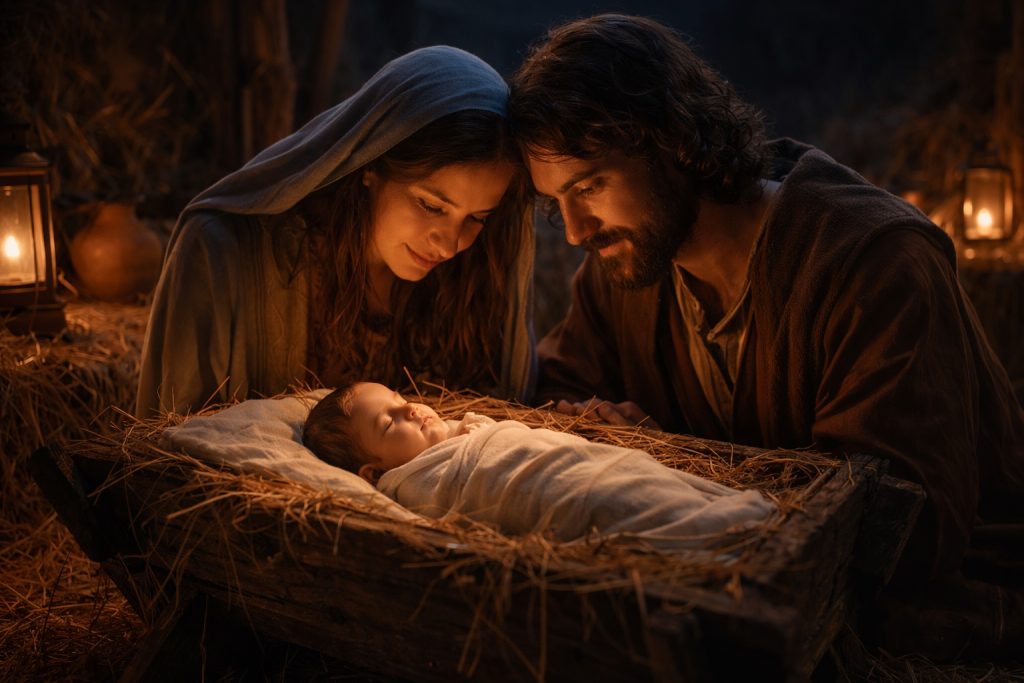
Why Christmas Is So Easy to Love
Christmas, at least as our culture presents it, is warm and inviting. It is built around family gatherings, familiar traditions, and a sense of nostalgia that makes people feel safe. The season emphasizes generosity, kindness, and goodwill, all of which feel good without demanding much in return.
There is nothing inherently wrong with enjoying those things. In fact, many of them reflect common grace. But the version of Christmas the world loves is carefully stripped of anything that confronts the soul. It focuses on a baby in a manger, quiet and harmless, wrapped in sentiment rather than authority, much like what happens when cities and institutions symbolically remove Christ from Christmas, a pattern I addressed in my earlier post about how removing Christ from Christmas empties the season of meaning.
A baby makes no moral demands. A baby does not challenge lifestyles, confront sin, or call anyone to repentance. A baby can be admired, photographed, and celebrated without requiring change. That is why Christmas fits so comfortably into a culture that prizes self expression and personal autonomy.
The cultural version of Christmas allows people to feel spiritual without submitting to truth.
That distinction matters more than we often realize.
Why Christ Is Hard to Accept
Christ does not remain in the manger. He grows up. He teaches. He rebukes. He calls people to turn away from sin and to follow Him fully. He does not ask for admiration but for allegiance.
When Jesus spoke, He spoke with authority. He claimed to be the way, the truth, and the life. He warned about judgment. He spoke openly about repentance, obedience, and the cost of discipleship. He told people to deny themselves and take up their cross.
That message collides head on with modern culture.
The world is comfortable with inspiration but not transformation. It enjoys spiritual language as long as it does not interfere with personal desires. Christ does not offer that kind of arrangement. He demands lordship.
A Savior who forgives is welcome. A King who commands is not.
This is where the divide becomes clear.
Christmas vs Christ in Modern Culture
Christmas vs Christ is not just a clever phrase. It describes a real spiritual divide that shows up everywhere, from advertising to entertainment to public discourse. Our culture is happy to celebrate Christmas as a vague symbol of love and unity, but it quickly grows uncomfortable when Christ is named as Lord.
You can see this in how often Jesus is reduced to a teacher, a moral example, or a historical figure. Each of those descriptions allows people to keep Him at arm’s length. None of them require submission.
Culture prefers a Jesus who affirms rather than redeems, who inspires rather than transforms, and who comforts rather than convicts. But that is not the Jesus revealed in Scripture, nor the Jesus explained when Christians reflect on the true meaning of Christmas.
The real Christ confronts pride. He exposes sin. He calls people out of darkness and into light. That kind of authority is threatening to a culture built on self definition.
A Closer Look at the First Christmas
Even the original Christmas story makes this tension obvious. Jesus was not born into comfort or applause. He entered the world quietly, humbly, and under threat. His very presence unsettled those in power.
Herod did not see a sweet baby. He saw a rival king. The religious leaders did not rejoice. They remained indifferent. Only the humble, the poor, and the obedient responded with worship.
That pattern has not changed.
Those who understand who Christ truly is either fall down in worship or turn away in resistance. Neutrality is rarely an option for long.
A Personal Reflection
I have had to examine my own heart on this. It is easy, even for believers, to enjoy the rhythms of Christmas while subtly resisting the deeper call of Christ. Traditions can become comfortable. Familiar stories can lose their weight. Reverence can be replaced by routine.
I have learned that it is possible to celebrate Christmas outwardly while keeping Christ at a distance inwardly. That realization has forced me to slow down and ask hard questions about obedience, not just belief.
Faith is not measured by how warmly we speak about Jesus during the holidays. It is measured by whether we submit to His authority the rest of the year.
What Christmas Is Really Pointing Toward
Christmas does not end in Bethlehem. It points forward. The manger leads to the cross, and the cross leads to the resurrection. The baby born in humility becomes the risen Lord who reigns in glory.
That is why separating Christmas from Christ ultimately empties the season of its meaning. Without Christ, Christmas becomes a hollow celebration, beautiful on the surface but spiritually shallow.
With Christ, Christmas becomes a reminder that God entered a broken world to redeem it, not to affirm it in its brokenness.
The good news of Christmas is not comfort alone, it is salvation.
That salvation requires a response.
An Invitation to Clarity
This Christmas, the question is not whether we enjoy the season. The question is whether we are willing to follow the Savior. Christ does not force Himself on anyone, but He does not negotiate His authority either.
The world will continue to love Christmas. It will continue to decorate, celebrate, and sentimentalize. But only those who submit to Christ will understand what Christmas truly means.
The call of Christmas is not merely to celebrate a birth but to bow before a King.
Arch Kennedy
Bold, Unfiltered, and Unafraid
Watch my full commentary below:
 Protecting Children From Gender Medicine
Leave a Reply