Misunderstood villains have become one of the most noticeable and troubling trends in modern storytelling, and once you see it, you cannot unsee it. What used to be clear moral instruction has slowly been replaced with moral confusion, especially in stories aimed at the youngest and most impressionable audiences.
I am not talking about adding emotional depth to characters or exploring how pain can shape people. I am talking about something very different. I am talking about stories that actively reverse moral categories, taking characters once clearly portrayed as cruel or evil and recasting them as misunderstood heroes who were never really wrong to begin with.
This shift matters because stories do more than entertain. They teach. They shape conscience. They form how children and adults alike understand right and wrong long before they can articulate those ideas for themselves.
Modern storytelling is increasingly rewriting misunderstood villains as heroes, blurring moral clarity and training audiences, especially children, to question whether evil actually exists at all.
Scripture warned us about this long before Hollywood figured out how effective it would be.
“Woe to those who call evil good and good evil, who put darkness for light and light for darkness.” Isaiah 5:20
That verse is not about confusion. It is about reversal. And reversal is exactly what we are seeing play out on screens today.
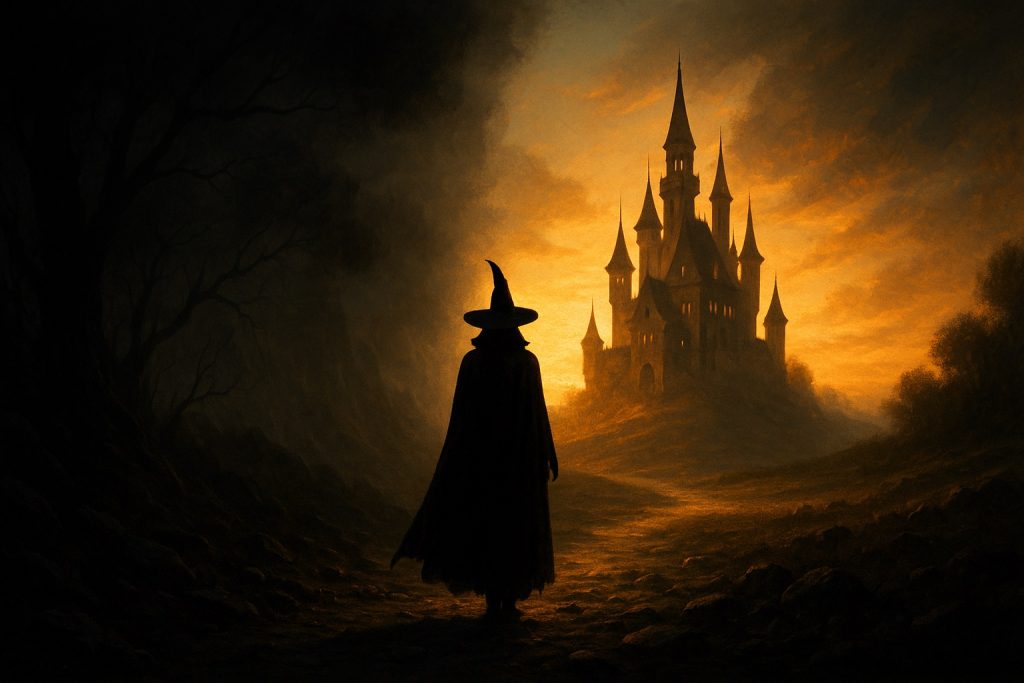
When villains stop being villains
Classic stories were not subtle about morality. Villains were villains because they chose cruelty, pride, envy, or abuse of power. They harmed others, often knowingly. The audience did not have to guess who was wrong. Moral clarity was built into the story itself.
Modern storytelling has moved away from that clarity. Today, villains are no longer wrong. They are wounded. They are marginalized. They are misunderstood. The real wrongdoing, we are told, belongs to society, tradition, or anyone who dares to judge their behavior.
This is not accidental. It reflects a worldview that rejects the biblical idea of sin and replaces it with self justification.
Scripture does acknowledge pain, trauma, and brokenness. But it never allows those things to erase responsibility. Pharaoh had fear and pride. Saul had insecurity. Judas had disappointment. None of that excused their actions. The Bible explains evil without excusing it.
Modern stories increasingly do the opposite.
Wicked and the rehabilitation of evil
The musical and film Wicked is one of the clearest examples of this shift. In the original The Wizard of Oz, the Wicked Witch of the West is the embodiment of evil. She is not complicated. She is not secretly noble. She is wicked.
In Wicked, she is rewritten as the wronged outsider, the victim of propaganda, the misunderstood truth teller, and possibly the real hero of the story. The audience is asked to reverse its moral judgment entirely. The original story’s understanding of good and evil is portrayed as ignorant, unfair, and even cruel.
Thoughtful Christians have noticed this same pattern, and some are trying to help parents talk about it. In resources like Wicked: A Biblical Worldview Evaluation for Parents and Kids, the concern is not that backstory exists, but that moral categories are being quietly rewritten while families sing along.
That matters because when a story tells you that the villain was actually the good one all along, it is not just adding nuance. It is dismantling the very idea of moral truth.
Misunderstood villains in children’s animation
When this same narrative move appears in children’s animation, the stakes rise dramatically.
In STEPS, an animated retelling of Cinderella shared by Allie Beth Stuckey, the story invites viewers to see Cinderella’s stepsisters through a new lens. Instead of being clearly cruel and jealous, their treatment of Cinderella is reframed as misunderstood, and the audience is encouraged to feel that the original judgment of them was unfair.
This is not harmless creativity. Those stepsisters were originally written to embody jealousy, entitlement, and abuse. Their behavior was not a misunderstanding. It was moral failure.
When animation tells children that these characters were actually victims, the lesson is clear. Moral judgment itself becomes suspect. Right and wrong become fluid. Evil may not exist at all.
Children do not have the cognitive tools to separate empathy from moral approval. They absorb categories. When those categories are inverted, confusion replaces clarity.
A culture that cannot name evil cannot resist it.
That is why this trend belongs in the category of spiritual discernment, not mere entertainment critique.
Why animation is the perfect delivery system
Animation carries an automatic assumption of innocence. Parents lower their guard. Viewers expect safety. That trust is precisely what makes animation such a powerful teaching tool.
Children learn morality through stories long before they learn it through arguments. When animated stories quietly teach that villains were never really villains, children internalize the idea that moral judgment itself is unfair or harmful.
That worldview stands in direct opposition to Scripture, which teaches that truth, justice, repentance, and redemption all depend on the reality of sin. As one biblical resource puts it, Isaiah’s warning is a direct rebuke to those who “call evil good and good evil,” and it exposes the deep spiritual danger of moral reversal, not just moral confusion. You can see this unpacked in What does it mean to call evil good and good evil.
If there is no real evil, there is no need for repentance. And if there is no need for repentance, there is no need for a Savior.
That is not a small shift. It strikes at the heart of the gospel.
This is not about rejecting empathy
It is important to be clear about what this argument is not. I am not arguing against empathy. I am not arguing for shallow characters or simplistic storytelling.
Biblical truth allows for compassion without compromise. Jesus showed mercy without denying sin. He healed without pretending evil was good. He forgave without treating evil as irrelevant.
Modern storytelling often collapses those distinctions. It treats moral judgment as cruelty and accountability as oppression.
That is why Isaiah’s warning fits so precisely. Calling evil good does not produce compassion. It produces confusion.
When moral clarity disappears, children are left without a compass.
The spiritual cost of moral inversion
The repeated rehabilitation of villains trains audiences to distrust the very idea of evil. That may sound enlightened, but it comes at a cost.
Scripture teaches that the human heart is deceitful. It teaches that sin is real, destructive, and personal. It teaches that redemption is meaningful precisely because evil is real.
A culture that rewrites villains into heroes is not becoming kinder. It is becoming less honest.
This trend does not just reshape entertainment. It reshapes how people understand themselves, their choices, and ultimately their need for grace.
When everything is a misunderstanding, nothing needs repentance.
The pattern of misunderstood villains is not neutral. It is one more way our culture trains people to believe that evil is mainly a matter of perspective, and that the only real sin is making moral judgments at all.
Why Christians should pay attention
This is not a call to panic or boycott every film. It is a call to discernment.
Christian parents, pastors, and believers need to recognize patterns, not just isolated examples. Stories form the imagination. The imagination forms the conscience. And the conscience shapes how truth is received or rejected.
If you want to dig deeper into how Christians should think about truth and moral absolutes in a relativistic age, I unpack that more in my post Biblical Truth vs. Cultural Relativism: What Should Christians Believe?
And if you want a broader look at how Hollywood shapes values in general, and why Christian discernment must include what we watch, you can read How Hollywood Subtly (or Not So Subtly) Undermines Biblical Values
What we normalize in stories, we normalize in life.
Holding fast to truth
Isaiah’s warning was not written to scare people. It was written to wake them up.
Calling evil good is not progress. It is a sign of moral decay. And rewriting villains as heroes is one of the quietest ways that decay spreads.
Christians are called to be discerning without being fearful, thoughtful without being cynical, and compassionate without surrendering truth.
Stories matter. And so does the way they teach us to see good and evil.
Arch Kennedy
Bold, Unfiltered, and Unafraid
Watch my full commentary below:
 A Portrait, a Name, and the Left’s War on Biblical Truth
Leave a Reply