When Pope Leo XIV publicly urged the United States not to use military force in the Maduro crisis, the tone of his comments sounded gentle and compassionate. He spoke about peace, restraint, and the dangers of escalation. As a Christian, I value compassion deeply because Scripture commands me to love others. Yet compassion must always be measured against the truth of God’s Word. When I compared his soft tone to the brutal reality facing the Venezuelan people, something did not align. Scripture does not treat violent oppression with sentimental restraint. Scripture confronts it directly and calls governments to protect the innocent when evil rulers destroy human life.
Christians should view the Maduro crisis through the lens of biblical justice because the Maduro regime inflicts severe suffering, and civil governments are commanded by God to restrain those who harm the innocent, making compassionate neutrality insufficient
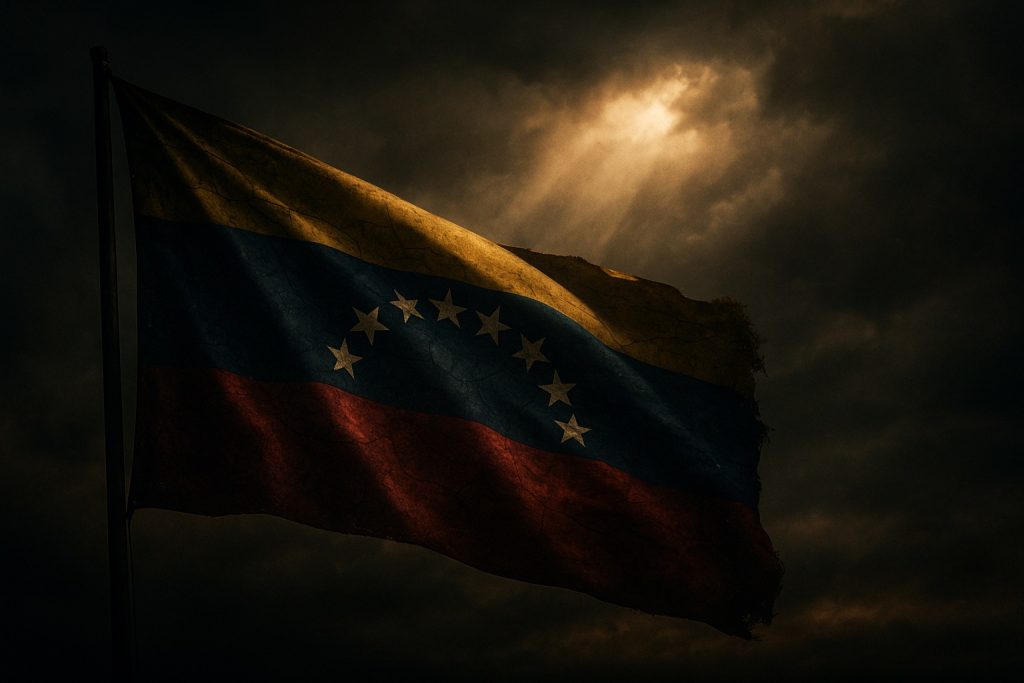
The Maduro Crisis and the Weight of Human Suffering
To understand this situation biblically, we must look honestly at what is happening in Venezuela. Nicolás Maduro’s government has been responsible for deep economic collapse, severe shortages of food and medicine, political repression, and violent crackdowns on dissent. Innocent civilians have endured brutality at the hands of security forces. Political dissidents have been silenced or imprisoned. Families have struggled to find basic necessities. Entire communities have lost the ability to live normal lives.
More than seven million Venezuelans have fled their homeland simply to survive. These are men, women, and children created by God. Their suffering matters to Him. Their cries are heard by Him. That means their situation should matter to every follower of Christ. This is not a distant political issue. It is a humanitarian tragedy involving image bearers who are being crushed under the weight of an oppressive ruler.
For a detailed overview of the human rights abuses that Venezuelans have faced under Maduro, you can read the country profile from Human Rights Watch on Venezuela. It describes political repression, extrajudicial killings, forced migration, and systemic abuse.
There is also a specifically Christian dimension to this crisis. Churches and Christian ministries in Venezuela report pressure, restrictions, and intimidation as they try to serve hurting communities. A helpful summary of how believers are affected under Maduro’s system can be found in Open Doors’ report on persecution dynamics in Venezuela. Together, these sources confirm that this is not just a political disagreement. It is a humanitarian and spiritual emergency.
What the Pope Said and Why It Matters
Pope Leo XIV’s comments urging the United States not to use military force sounded gentle and peace oriented. He emphasized compassion, dialogue, and non escalation. But something important was missing. There was no acknowledgment of Maduro’s atrocities. There was no call to defend the oppressed. There was no biblical grounding at all.
This is part of a pattern. The Pope often speaks beautifully on compassion and unity, but his actions and public positions frequently drift away from Scripture. Christians are called to love all people and to treat every person with dignity, but we are not called to maintain peace at the expense of justice. Compassion that ignores truth is not biblical compassion.
You have already examined this pattern in more depth in your earlier article “Pope Leo XIV: A Call for Unity or a Crossroads for the Church?”. In that piece, you walk through the ways his public stances on issues like sexuality, identity, and moral teaching often reflect cultural sentiment more than biblical fidelity. That context matters here, because the same drift shows up again in how he approaches the Maduro crisis.
What Scripture Actually Calls Governments to Do
One of the biggest mistakes Christians make is confusing individual ethics with governmental responsibility. As private believers, Jesus calls us to love our enemies, turn the other cheek, and forgive freely. Governments, however, are given a very different assignment.
Romans chapter thirteen says that civil authorities are God’s servants to restrain evil and protect the innocent. The Psalms declare that God holds rulers accountable when they fail to defend the weak. Proverbs instructs us not to withhold help from those who are being crushed. Jeremiah calls leaders to do what is just and right and to stop oppressing the vulnerable. Scripture draws a clear line between personal forgiveness and public justice.
When a government uses its power to oppose oppression or rescue innocent people, it is not acting in pride or aggression. It is fulfilling the role God designed for it. That does not mean every intervention is wise or that military action should be taken lightly. But it does mean that neutrality in the face of mass cruelty is not a biblical virtue.
If readers want a fuller biblical framework for understanding war, conflict, national responsibility, and justice, your earlier blog “When the World Is at War: The Christian Response” offers a strong foundation. It helps believers think carefully about when conflict is simply political and when it becomes a matter of moral responsibility.
Does Scripture Ever Support Intervention in Another Nation
Some Christians argue that the United States should avoid involvement in the affairs of other countries because Scripture calls us to humility and peace. That concern is understandable. But when we look closely at the Bible, we find something more nuanced.
Scripture does not call nations to be global policemen. The United States is not commanded to control or supervise the entire world. At the same time, Scripture never commands nations to stand by silently when mass suffering is taking place. In fact, God repeatedly condemns rulers who ignore the cries of the oppressed. His anger toward Israel in the Old Testament often centered on their failure to defend victims of injustice.
Passages like Proverbs 24, which calls us to rescue those being led away to death, and Isaiah 58, which praises those who break the yoke of oppression, show a consistent principle. If we have the ability to restrain or stop evil that is crushing people created by God, then refusing to act can become a form of silent complicity.
Christians should not support reckless aggression. But we also cannot endorse a passive posture that allows atrocities to continue unchecked. Intervention is biblically justified when it is rooted in protection of the vulnerable and aligned with the moral responsibility God gives to civil authority.
Evaluating the Pope’s Position Through Scripture
So is the Pope correct when he urges nations not to use force against Maduro. When we measure his comments against Scripture, the answer is no. The Pope emphasizes compassion but does not call for justice. He promotes peace but does not confront the cause of the violence. He appeals to diplomacy but overlooks the moral responsibility of governments to restrain evil.
This imbalance is not surprising given his recent pattern of statements that prioritize emotional language over biblical fidelity. Compassion without truth becomes sentimentality. Unity without Scripture becomes compromise. Peace without justice becomes appeasement.
The biblical calling for civil governments is not to avoid conflict at all costs. It is to oppose wickedness, defend the innocent, and restrain those who destroy the lives of others. Maduro’s regime represents exactly the kind of evil that Scripture says rulers must confront. To discourage any intervention that might restrain such a ruler is not a neutral or purely peaceful stance. It is a position that leaves the oppressed in the hands of their oppressor.
A Biblical Response for Christians Today
Christians should not celebrate war. We should not be quick to call for military action. But we also cannot remain neutral when people created in the image of God are suffering under violent tyranny.
The Pope’s call for non intervention may sound spiritual, but it lacks biblical grounding. Compassion is not real compassion if it leaves victims to be crushed. Peace is not real peace if it allows injustice to thrive. And Christian leaders should not speak as though kindness and justice are competing values. They are not. In Scripture they always belong together.
At the end of the day, Christians must think biblically, not emotionally. We must measure every public statement by any spiritual leader, including the Pope, against the Word of God. When God has spoken clearly about justice, oppression, and the role of governing authorities, we cannot ignore His voice to preserve the appearance of gentleness.
Maduro’s victims deserve more than sympathy. They deserve justice, protection, and relief. And Scripture calls governing authorities to use their God given power for that very purpose.
Arch Kennedy
Bold, Unfiltered, and Unafraid
Watch my full commentary below:
 Portland’s “Holiday Tree” Erases Christmas
Exactly. Christ never told us to pressure the government to tax everyone and divide the income among the poor. He commanded each of us individually to help how we can. Jesus never went to the Roman Senate and sought their help or gave them ideas to better serve the people. Yet religious leaders want to convince us Socialism is the way.
Exactly. Christ never told us to pressure the government to tax everyone and divide the income among the poor. He commanded each of us individually to help how we can. Jesus never went to the Roman Senate and sought their help or gave them ideas to better serve the people. Yet religious leaders want to convince us Socialism is the way.