When I hear about new accusations surrounding Vatican scandals, I can’t say I’m shocked. Man is sinful by nature, and when you combine great power, vast wealth, and limited accountability, corruption is never far away. While the latest claims are still unproven, history shows us that the Vatican has faced repeated allegations of financial misconduct — and often, where there’s smoke, there’s fire.
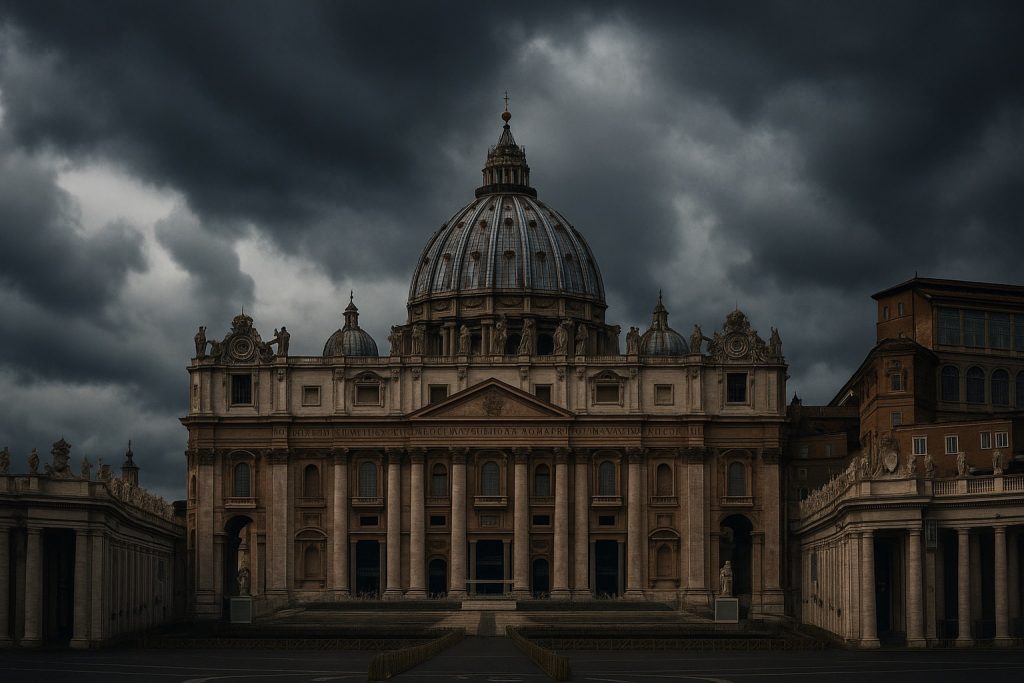
The Latest Allegations
In August 2025, former Vatican auditor Libero Milone made headlines by alleging that the Vatican’s payroll agency (APSA) had a hidden ability to alter account names and numbers on bank transfers after they were sent. If true, this would create an easy pathway for money laundering. These claims were reported by Politico, which quoted Milone as describing this as a “skeleton key for money laundering.”
Milone’s allegations were also covered by Sleuth News, which highlighted suspicious transfers of roughly $2 million to Neustar’s Melbourne, Australia office in 2016–17 — transactions with no clear business justification that coincided with the politically charged “Russiagate” period. Some have speculated about possible intelligence connections, but no evidence has confirmed such a link.
The Vatican strongly denies the allegations, calling them “completely unfounded” and pointing to multiple independent audits that found no irregularities. They also note that APSA did not service private clients during the period in question. Technical experts have added that altering details in SWIFT transfers — the global system used by banks to send secure payment instructions — would be extremely difficult because each message is encrypted, digitally signed, and stored with immutable records. In other words, any post-transfer change would likely leave a trace, making it risky and easily discoverable. This is why Milone’s claim is so controversial: if true, it would suggest a breach of a system designed to be tamper-proof.
For now, these remain allegations — serious enough to warrant attention, but not yet supported by publicly available proof.
A Long History of Vatican Scandals
This isn’t the first time the Vatican’s finances have come under scrutiny. Over the decades, Vatican scandals have ranged from mafia connections to billion-dollar investment losses. Here are some of the most infamous:
- Banco Ambrosiano collapse (1982) – The Vatican Bank was linked to the mysterious downfall of Italy’s Banco Ambrosiano, involving complex offshore structures, money laundering allegations, and mafia ties. Its chairman, Roberto Calvi, nicknamed “God’s Banker,” was found dead under London’s Blackfriars Bridge in what many believe was a mob hit.
- Vatileaks (2012) – Confidential Vatican documents were leaked to the press, revealing internal corruption, inflated contracts, and fierce resistance to Pope Benedict XVI’s attempts at financial reform. The scandal led to the arrest of the Pope’s own butler and a crisis of confidence inside the Curia.
- Monsignor Scarano case (2013) – Dubbed “Monsignor 500” for his habit of carrying €500 notes, Scarano was accused of trying to smuggle €20 million from Switzerland to Italy on a private jet. While he was acquitted of some charges, the case exposed weaknesses in Vatican oversight.
- London real estate scandal (2020s) – The Vatican lost hundreds of millions of euros in a luxury property deal gone wrong. Prosecutors alleged embezzlement and fraud, resulting in the conviction of Cardinal Angelo Becciu, one of the highest-ranking officials ever to face a Vatican trial.
- APSA’s questionable investments (various years) – Even outside of headline-making trials, the Vatican’s Administration of the Patrimony of the Apostolic See has been criticized for opaque investments and questionable partnerships.
The pattern is undeniable: financial secrecy, concentrated power, and limited outside oversight have repeatedly created an environment where abuse can occur.
A Biblical Reality Check
As a Christian, I’m reminded that the failures of men do not diminish the truth of the Gospel. The Bible is very clear: “The heart is deceitful above all things, and desperately sick” (Jeremiah 17:9). Even those in positions of spiritual authority are not immune to temptation.
It’s easy to point fingers at the Vatican, but the deeper lesson here is about the universal nature of sin. Institutions can fail because people fail. Money, when misused, becomes a snare, just as 1 Timothy 6:10 warns: “For the love of money is a root of all kinds of evils.” I’ve written before about the importance of holding fast to God’s truth in a world that often distorts it — you can read more in my blog on Biblical Truth vs Cultural Relativism.
The lesson for us as believers is simple: never place your ultimate trust in human institutions, even those that wear the name of Christ. Our faith must be anchored in the unchanging truth of God’s Word, not in the shifting sands of human leadership.
Why Allegations Keep Surfacing
In my view, the reason Vatican scandals continue to make headlines is twofold:
- Systemic vulnerability – A powerful, wealthy institution with minimal external oversight will always be at risk.
- Historical baggage – Once a reputation for secrecy and corruption takes hold, every new claim — even unproven — gains traction.
We may never know if Milone’s current allegations are true. But history gives us reason to remain vigilant. Our faith must be rooted in Christ alone, not in any institution, however venerable it may appear.
Arch Kennedy
Bold, Unfiltered, and Unafraid
 University of Scranton Hires Pro-Abortion Politician
Leave a Reply